
MORE THAN A CANOE
Discover the history, tradition and community behind outrigger canoe paddling.
A Brief History of Outrigger Canoe Paddling
For generations, outrigger canoes connected communities across the Pacific.
Canoes were essential for transportation, fishing, exploration and communication.
The outrigger design uses a supporting float — the ama — connected to the canoe to provide stability while allowing the canoe to travel efficiently through the water.
In Hawaiʻi, the waʻa carries deep cultural meaning.
The canoe represents connection and responsibility.
Every person has a role. Every action affects the crew. Moving forward requires people to work together.
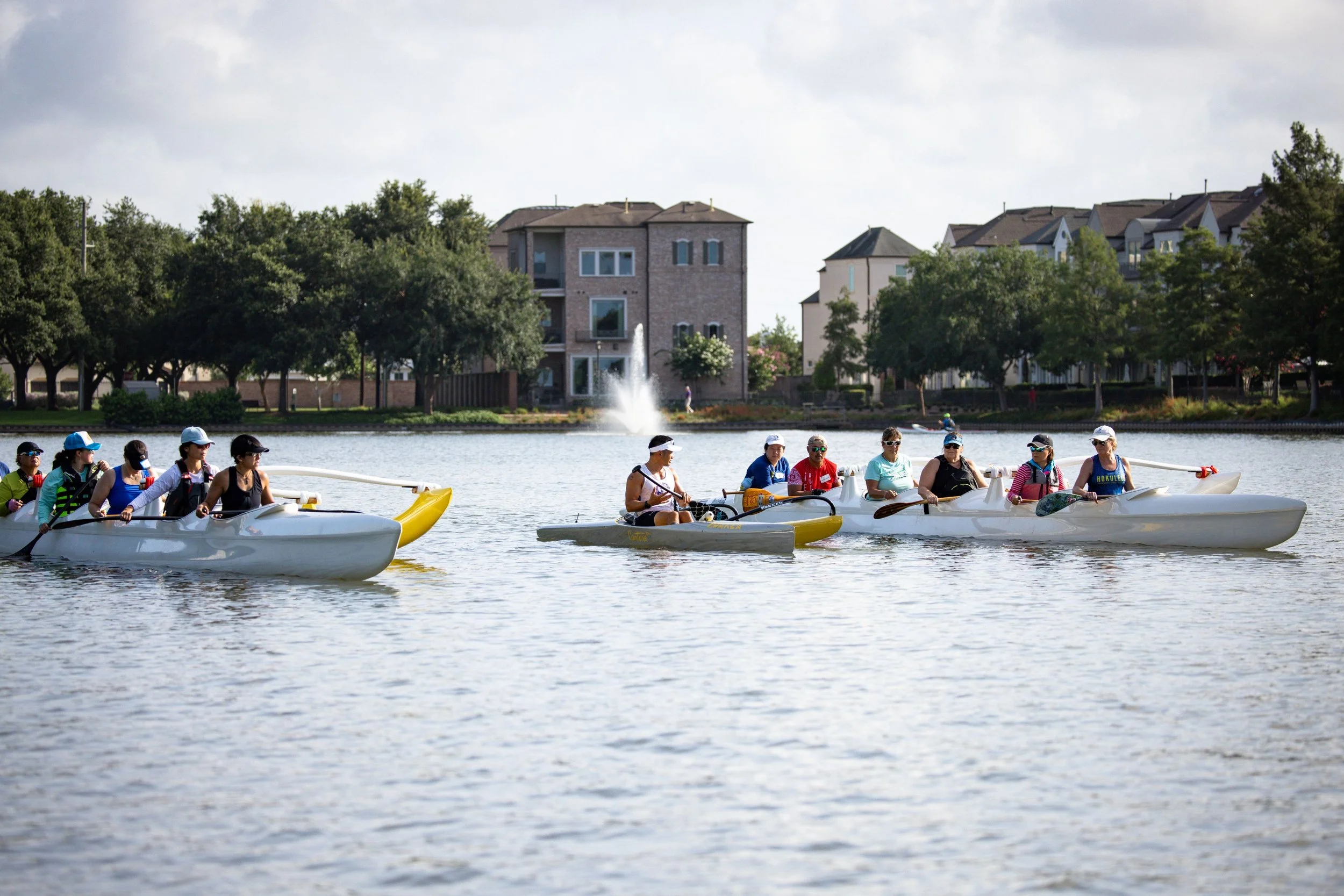
Today, outrigger canoe paddling has developed into an international competitive sport while continuing to carry important traditions and values from the communities where the sport originated.
Athletes race individual and crew canoes in sprint, distance and open-water events.
At TORA, we believe growing the sport also means respecting its roots.
We encourage our community to learn, listen and approach the canoe with respect.
Learn the Canoe
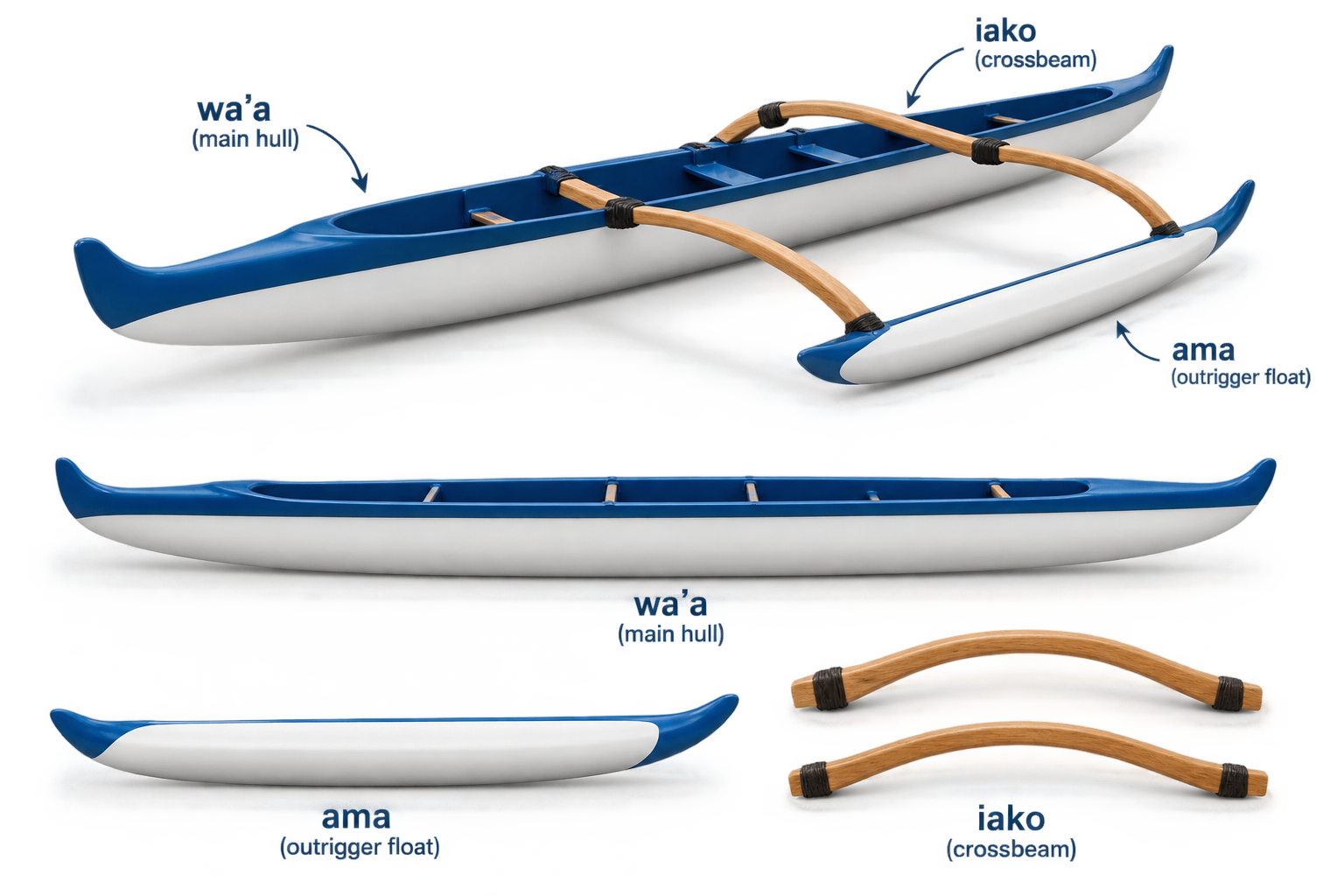
WAʻA
The canoe.
AMA
The outrigger float that helps stabilize the canoe.
IAKO
The supports connecting the ama to the canoe.
OC1
One-person outrigger canoe.
OC2
Two-person outrigger canoe
STEERSPERSON
The athlete responsible for steering and helping guide the canoe.
OC6
Six-person outrigger canoe.
Want to Experience Outrigger Paddling?
The best way to understand the canoe is to get on the water.
The Waʻa: More Than a Canoe
For Hawaiians, the waʻa (canoe) has never simply been a canoe.
Long before outrigger canoe paddling became a competitive sport, the waʻa was part of how our people lived, traveled, gathered food, explored and remained connected to one another. Our kūpuna (ancestors and elders) understood the ocean not as something that separated us, but as something that connected us. The waʻa carried our people across that ocean and became part of the story of who we are.
That history matters because every time we step into a Hawaiian outrigger canoe, we are participating in something much older than ourselves.
People come to paddling for many reasons. Competition. Exercise. Friendship. A love of water. Sometimes simply because someone invites them to try it.
You do not have to be Hawaiian to paddle a Hawaiian canoe. But when you choose to do so, you also accept the responsibility to understand and respect the culture that gave the waʻa to you.
That does not mean pretending to be Hawaiian. It means learning.
It means understanding why we do certain things, respecting the traditions and protocols surrounding the canoe, learning the language associated with it and recognizing that the waʻa is more than equipment we take to the water.
The waʻa is something we mālama (care for and protect).
And through it, we learn how to mālama one another.
Kuleana: Knowing Your Responsibility
Every seat in a waʻa has a purpose.
The stroker sets the pace. The crew follows that rhythm and gives their strength to the canoe together. The steersperson reads the water, wind, canoe and crew while guiding everyone safely toward their destination.
No seat succeeds alone.
That is kuleana (responsibility and the obligation entrusted to us).
Kuleana is often translated simply as “responsibility,” but it carries much more than that. It is understanding what has been entrusted to you and caring enough to do your part well because others depend upon you.
Your kuleana begins before the canoe ever touches the water. It helps carry and rig the waʻa. It is caring for the equipment. It is showing up prepared. It is learning. It is helping the person beside you. And when the day is finished, it is making sure the work is finished together.
When one paddler stops thinking only about themselves and begins thinking about what the canoe and the crew need, they begin to understand what it means to truly be part of a crew.
Hoʻolohe: Learning to Listen
Water teaches us very quickly that we are not in control of everything.
We learn to pay attention.
We listen to calls from the steersperson. We feel changes in the canoe beneath us. We watch the paddler ahead of us. We notice the wind, current and weather.
Hoʻolohe (to listen, hear and pay attention) is an important part of learning in Hawaiian culture. Before we can lead well, we must first know how to listen and observe.
The waʻa teaches both.
Laulima: Many Hands Working Together
Laulima (many hands working together) is something you can see and feel in a canoe.
Six people may enter the waʻa with different strengths, personalities, experiences and abilities. Once the canoe begins moving, individual strength matters far less than collective rhythm.
If six people paddle as six individuals, the canoe feels it. When six people paddle as one crew, you feel that too. The waʻa responds. That lesson reaches far beyond the water. ʻOhana (family) works this way. Community works this way. Leadership works this way.
Our strength does not come only from what we can do individually, but from what we are willing to contribute to one another.
Mālama: Caring for What Carries Us
We have a responsibility to care for the waʻa, the water and the places that allow us to paddle.
We do not simply use them. We mālama them.
The canoe is cared for before and after we paddle. The shoreline should be left better than we found it. The water deserves our respect because it is not merely our playing field.
For generations, the kai (sea or ocean) fed our people, carried our people and connected our islands to one another and to the larger Pacific.
Those of us who paddle far from Hawaiʻi may be on different waters, but that responsibility does not disappear.
If anything, it becomes even more important that we understand what we are carrying with us.
The Waʻa as a Teacher
Some lessons cannot be learned from a book.
The waʻa teaches patience because the water will not always cooperate with our plans.
It teaches humility because there will always be something greater than us. It teaches discipline because the crew depends upon us even on the days when we are tired. It teaches trust because sometimes we cannot see what the steersperson sees. It teaches leadership because eventually someone must be willing to make the call. And it teaches community because no matter how strong one person may be, none of us move the canoe alone.
Our kūpuna crossed enormous stretches of the Pacific through knowledge, courage, observation, preparation and trust in one another. The waʻa carried people, knowledge, language and traditions from one generation to the next.
Today, we paddle for different reasons. We paddle for competition, recreation, health, friendship and the simple joy of being on the water.
But when we climb into a Hawaiian outrigger canoe, we should understand that we are stepping into something with a history.
We honor that history not by trying to become something we are not, but by respecting what has been entrusted to us and carrying its values forward.
Know your kuleana.
Hoʻolohe. Listen and learn.
Mālama the waʻa, the water and one another.
Give your strength to something larger than yourself.
And when it is time to paddle, paddle together.
Because the waʻa moves forward when we do.